
An employment verification form serves as official documentation that confirms a person’s work history, job title, employment dates, and salary information. Whether you’re applying for a mortgage, renting an apartment, or pursuing a background check, this document plays a crucial role in verifying your employment status. In today’s competitive US jobs market and stringent lending environment, understanding how to complete and use employment verification forms correctly can make the difference between approval and rejection.
What Is an Employment Verification Form?
An employment verification form is an official document that validates your employment status with a specific employer. This certification typically comes directly from your employer’s HR department and serves as proof that you work (or worked) there. The form confirms basic details like your employment dates, position, and sometimes salary information.
Unlike a simple letter of employment, verification forms follow standardized formats and are often used by third parties such as mortgage lenders, landlords, background check agencies, and government immigration authorities. The structure and content of these forms may vary slightly depending on who’s requesting them, but the core information remains consistent across industries.
Many employers now offer digital verification through third-party platforms like The Work Number, which allows instant verification without manual HR processing. This modernization has streamlined what once was a time-consuming paper-based process.
Key Information Found on Employment Verification Forms
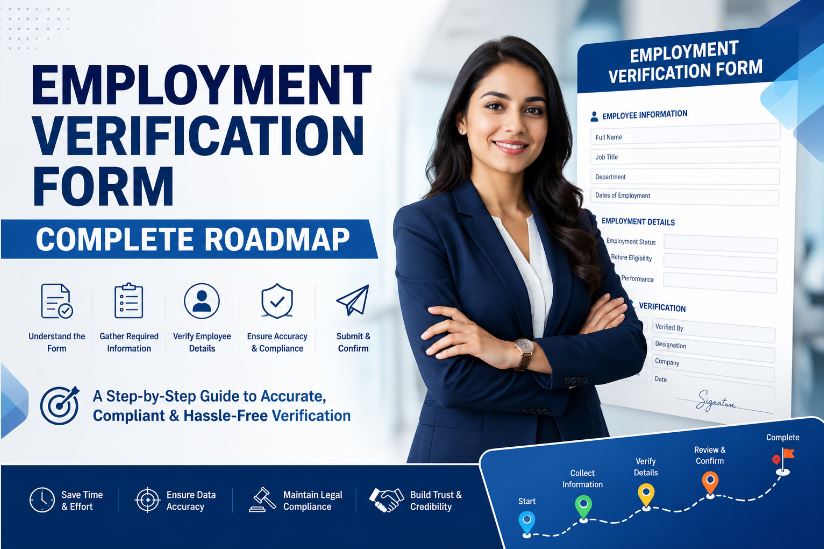
Employment verification forms contain specific data points that third parties need to confirm your employment legitimacy. Here’s what you’ll typically find:
- Employee Information: Your full name, employee ID, date of birth, and social security number (partially masked for privacy)
- Employment Dates: Start date and current employment date (or end date if no longer employed)
- Job Title: Your current or most recent position at the company
- Employment Status: Whether you’re full-time, part-time, contract, or temporary
- Compensation Details: Annual salary, hourly rate, or payment frequency (not always included due to privacy concerns)
- Department/Division: Your specific department or reporting structure
- Employer Contact Information: Company name, address, phone number, and HR department details
Why Do You Need an Employment Verification Form?
For New Hire Employment verification forms serve multiple critical purposes in today’s economy. Understanding when and why you might need one helps you prepare in advance and avoid unnecessary delays.
- Mortgage Applications: Lenders require proof of stable employment before approving home loans. Your employment verification confirms you have ongoing income to service the mortgage debt.
- Apartment Rentals: Landlords use verification forms to assess your ability to pay monthly rent. They typically want to see at least 2-3 years of employment history.
- Personal Loans: Banks and credit institutions require employment verification to determine creditworthiness and lending risk before approving personal loans.
- Background Checks: Employers conducting due diligence on new hires verify previous employment to confirm work history accuracy and detect dishonest job applicants.
- Visa and Immigration Sponsorship: Immigration authorities and visa application processes require employment verification to confirm employer sponsorship and job placement legitimacy.
How to Request Your Employment Verification Form
Requesting an employment verification form is straightforward, but timing and method matter. Here’s the step-by-step process:
- Contact Your HR Department: Reach out to your Human Resources or Personnel Department either in person, by phone, or email. Most companies have a standard process for these requests.
- Specify Your Needs: Clearly communicate what the verification is for (mortgage, rental, loan, background check) as some institutions have specific format requirements.
- Provide Relevant Details: Include your employee ID, full name, employment dates, and the date you need the verification completed.
- Allow Processing Time: Most companies process verification requests within 1-3 business days. High-volume periods may require 5-7 business days.
- Check Delivery Options: Ask whether the form will be mailed, emailed, or if you need to pick it up in person. For time-sensitive situations, email or in-person pickup expedites the process.
What About Digital Verification Services?
Modern employers increasingly use third-party verification platforms that offer instant access to employment history. The Work Number, operated by Equifax, is the largest employment verification database in the United States, covering millions of employees across multiple industries.
These platforms allow lenders, landlords, and other authorized parties to verify employment instantly without contacting your HR department directly. You can usually check whether your employer participates by searching the service’s database with your company name and your own employment information.
Digital verification offers several advantages including faster processing, 24/7 availability, reduced HR departmental burden, and improved accuracy. However, not all employers participate, and some situations may still require traditional paper verification forms.
FAQs
Can I get an employment verification form if I’m no longer employed at a company?
Yes, you can request verification of past employment. However, the process may take longer if the company has gone through ownership changes, restructuring, or if significant time has passed. Contact the HR department of your former employer or the company that currently manages their records. For very old employment or defunct companies, you might need to provide additional documentation or contact the company’s corporate office or successor organization.
Is employment verification the same as a reference letter?
No, they serve different purposes. An employment verification form is an official document from your HR department confirming factual employment data. A reference letter is typically written by a manager or supervisor and includes subjective information about your performance, work ethic, and qualifications. Lenders and landlords specifically require official verification forms, not reference letters.
How long is an employment verification form valid?
Most employment verification forms are considered valid for 30-90 days from the date of issue. Mortgage lenders typically want verification dated within the last 30 days, while landlords may accept verification up to 90 days old. Some government applications have different validity periods. Always check with the requesting organization for their specific requirements.
Can my employer refuse to provide an employment verification form?
While employers are not legally required to provide detailed employment verification in most jurisdictions, best practice dictates they should confirm basic employment facts. Some companies have policies against providing specific salary information. If your employer refuses to provide any verification, you can request it from payroll records, tax documents (W-2s or 1099 forms), or contact your state’s labor department for assistance.
What should I do if there are errors on my employment verification form?
Contact your HR department immediately upon discovering errors. Common mistakes include incorrect employment dates, wrong job title, or salary discrepancies. Request a corrected form before submitting it to the third party. Document all communication about the error correction for your records. If your employer is unresponsive, escalate to your direct manager or the HR director, explaining the time-sensitive nature of the verification request.