
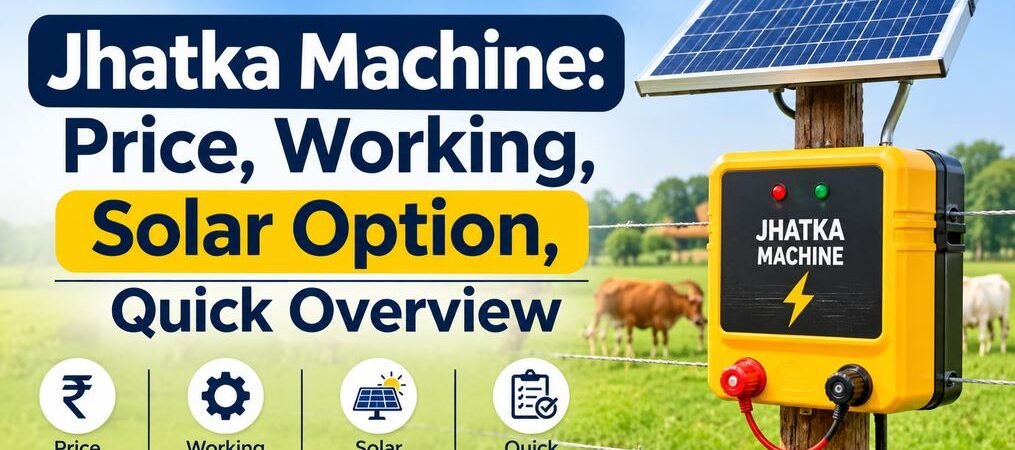
Jhatka Machine nowadays the requirements of every home and farmers where animals are making too much harm to crops and humans, Jhatka machine more and more beneficial to those areas where monkeys are in very huge number and these monkeys making too much harm to every things available in the home monkeys Indian farmers lose standing crops to nilgai, wild boar, monkeys, and stray cattle. A jhatka machine is one of the most talked-about answers to this problem. It is a fence energizer that sends a short, harmless-but-startling electric pulse through a fence wire, so animals learn to stay away from your field. This guide explains how a jhatka machine works, what it costs, which parts you need, and how to install it safely.
Key Takeaways
- A jhatka machine is a fence energizer that delivers a brief, low-current pulse to scare animals away from crops, not to harm them.
- A solar jhatka machine suits remote fields with no steady power supply and removes the monthly electricity bill.
- The right jhatka machine wire and jhatka machine insulator matter as much as the energizer itself. A poor fence line wastes the machine’s power.
- Jhatka machine price depends on the fence length, battery or solar panel size, and the brand’s safety certification.
- Never connect a fence directly to mains electricity. Use a certified energizer and follow local electrical safety rules.
Quick Answer: What Is a Jhatka Machine?
A jhatka machine is an electric fence energizer. It converts power from a battery, solar panel, or mains supply into short, high-voltage, very low-current pulses. These pulses travel along a fence wire. When an animal touches the wire, it feels a sharp shock, then retreats. The pulse repeats about once per second, so the fence stays active without being dangerous when the energizer is designed and installed properly.
How a Jhatka Machine Works
The working idea is simple. The energizer stores energy and releases it in a quick burst through a fence wire. The wire is held away from the ground and posts by insulators. When an animal touches the wire, it completes the circuit through its body to the earth. The animal feels the shock for a fraction of a second.
Three things make this system work:
- The energizer: It controls the voltage, the pulse timing, and the safe current limit.
- The fence line: Wire and insulators carry the pulse across the field.
- The earthing system: Earth rods give the current a return path. Weak earthing is the number one reason fences fail.
The shock is designed to be a deterrent. Reputable energizers keep the pulse extremely short, which is what separates a safe fence energizer from a dangerous bare live wire.
| # | Company / Brand | Location | Website / Listing URL | Manufacturer Description |
|---|---|---|---|---|
| 1 | Fieldmaster Innovation Limited | Ahmedabad, Gujarat | https://m.indiamart.com/fieldmaster | Manufacturer since 1995 of solar fencing systems and electric fence energizers. Known for solar jhatka machines for farm and perimeter security. |
| 2 | Divine Innovation | Ahmedabad, Gujarat | https://www.tradeindia.com/divine-innovation-30968742/ | Manufacturer and supplier of solar zatka machines, solar fence energizers and transformers since 2015. Offers USB-model and double-power solar fence energizers. |
| 3 | Varniraj Enterprise | Kathwada, Ahmedabad | https://m.indiamart.com/varnirajenterprise/profile.html | Manufacturer of solar zatka machines, solar fence guard systems and energizers. Sells the Galaxy range for crop protection. |
| 4 | Farm Electronics | Vastral, Ahmedabad | https://m.indiamart.com/farm-electronics/profile.html | Supplier of solar jhatka machines, agriculture solar zatka machines and solar fencing systems. Sells the Madhav jhatka machine brand. |
| 5 | R. C. Electricals | Agra, Uttar Pradesh | https://m.indiamart.com/r-c-electricals-agra | Offers solar fence zatka machines, solar jhatka machines and 5A jhatka machine chargers, with iron wire. A one-stop source for fence energizer and wire. |
| 6 | H V Enterprise | Rajkot, Gujarat | https://m.indiamart.com/genericsolar | Lists solar zatka machines of 5 kV to 15 kV, including ISI-marked solar fence energizers, with area coverage of up to 10 acres. |
| 7 | Swakarm | Surendranagar, Gujarat | https://www.zatka-machine.com/ | Fence energizer supplier named in a Bureau of Indian Standards (BIS) supplier report. Its zatka-machine.com website is shown next to the entry. |
| 8 | Urja Agricare Co. | India (online seller) | https://www.bighaat.com/products/urja-panel-fence-solar-zatka-machine-fence-energizer-for-1-to-90-acre-with-cable-and-2-piece-warning-boards-fencing-system | Sells Urja solar zatka machines for 1 to 90 acres, with cable and two warning boards. Used for crop protection and security fencing. |
| 9 | Rashail Agro | India (online seller) | https://agribegri.com/products/rashail-solar-fence-energizer-zatka-machine-18kv.php | Rashail 18 KV solar fence energizer for large fields, supplied with a power cable and hooter. |
| 10 | Mangla Solar System | India | https://m.indiamart.com/manglasolarsystem | Lists a 16 kV solar zatka machine. Its page describes a portable energizer with a rechargeable battery and built-in solar panel. |
| 11 | Heer Electro Control | Ahmedabad, Gujarat | https://www.tradeindia.com/pathfindeer-102563274/ | Lists a high-strength solar fence energizer. Suited to bulk or dealer orders. |
| 12 | Jai Karni Trading Company | Bikaner, Rajasthan | https://m.indiamart.com/impcat/solar-fence.html | Lists a solar jhatka machine and fence energizer for agriculture fencing. A good regional option for Rajasthan farmers. |
| 13 | Aastha Solar Jhatka Machine | Surajpur, Chhattisgarh | https://www.indianyellowpages.com/surajpur/aastha-solar-jhatka-machine-9640232/ | Lists a Khetpal solar fence energizer for protecting crops from boars, nilgai, deer and elephants. |
| 14 | Bengal Sheet Metal Works | Kolkata, West Bengal | https://m.indiamart.com/impcat/electric-fence.html | Listed under electric fence products. Offers an electric zatka machine fence energizer rated at 5 joule, covering about 40 acres. |
| 15 | United Agricare India Pvt. Ltd. (Hawky Eye) | New Delhi | https://m.indiamart.com/impcat/electric-fence.html | Sells the Hawky Eye brand for commercial and farm fencing. Its listing mentions clamps, a wire tightener, an energizer and a battery. |
| 16 | YSR Security System Pvt. Ltd. | India | https://m.indiamart.com/impcat/electric-energizer.html | Lists a 220 V electric energizer for commercial use. Aimed at perimeter security rather than only farms. |
| 17 | Oriental Solar | Kathwada, Ahmedabad | https://m.indiamart.com/impcat/electric-energizer.html | Lists an electric operated zatka machine fence energizer guard for agriculture, rated at 5 km fence length. |
| 18 | Platinum India Innovation | Nikol, Ahmedabad | https://m.indiamart.com/impcat/solar-energizer.html | Lists a yellow 12 kV solar fence energizer. |
| 19 | Umiya Multitech & Control India | Kathwada, Ahmedabad | https://m.indiamart.com/impcat/solar-energizer.html | Lists a zatka machine solar fence energizer for 60 acres, with 18,000 VDC output. |
| 20 | MBBS Pumps System (Rakshak brand) | India | https://www.indiamart.com/mbbspumpssystem-india/solar-zatka-machine-transformer.html | Offers the Rakshak solar jhatka machine and a digital automatic solar fence guard for farms and properties. |
Types of Jhatka Machines
Choose the type based on your power access and field size.
1. Mains-powered energizer
Runs on household or farm electricity. It suits fields near a reliable power connection.
2. Battery-powered energizer
Uses a rechargeable 12V battery. It works well where power is unreliable, but you need to recharge or replace the battery.
3. Solar jhatka machine
Uses a solar panel to charge a built-in or attached battery. It is the preferred option for remote farms.
4. Hybrid energizer
Works with solar and battery or mains backup. It costs more but offers the best uptime.
Solar Jhatka Machine: Is It Worth It?
For most small and mid-size farms, a solar jhatka machine is the most practical choice. Many Indian farms sit far from the nearest electric pole, and animals tend to raid crops at night when you cannot watch the field.
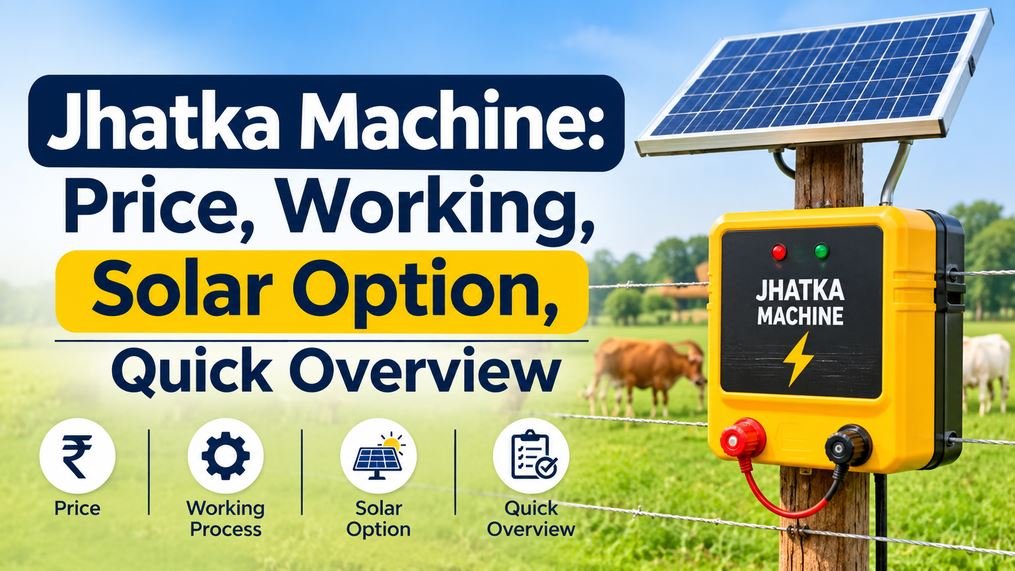
Why farmers choose a solar jhatka machine:
- No monthly electricity cost after purchase.
- Works in remote locations.
- Safer than running mains cable across an open field.
- Battery backup keeps the fence running at night and on cloudy days.
- Low maintenance if you clean the panel regularly.
Points to check before buying:
- Panel wattage and battery capacity should match your fence length.
- Look for a charge indicator and a fence voltage indicator.
- Ask about warranty and local service support.
- Check that the unit is rated for outdoor use and heavy rain.
A common error is buying an undersized solar unit for a long fence. Vegetation touching the wire drains power, so always size up slightly.
Jhatka Machine Wire: What to Use
The wire carries the pulse, so its quality decides how far and how well the fence works. Using the wrong jhatka machine wire is a frequent and costly mistake.
Common wire options:
- Galvanized iron (GI) wire: Affordable and widely available, but conductivity drops over time as rust builds up.
- Aluminium wire: Light, rust-resistant, and conducts better than GI. A popular choice for long runs.
- Stainless steel or poly wire: Poly wire has thin steel strands woven into plastic. It is easy to handle and works well for temporary or movable fences.
- High-tensile steel wire: Strong and long-lasting for permanent fences.
How to choose:
- Use thicker or higher-conductivity wire for longer fences.
- Avoid mixing different metals, which causes corrosion at joints.
- Keep joints tight and clean to prevent voltage loss.
- Space wire strands according to the animals you want to deter. For example, nilgai and wild boar need different heights.
Jhatka Machine Insulator: Why It Matters
A fence without good insulators is just a wire leaking power into the ground. A jhatka machine insulator keeps the live wire away from posts, trees, and anything that could carry current away.
What good insulators do:
- Hold the wire in position.
- Stop current from leaking into wooden, metal, or damp posts.
- Withstand sun, rain, and temperature changes.
Common types:
- Pin insulators: Fit onto the top of wooden or metal posts.
- Ring or screw-in insulators: Easy to install on wooden posts.
- Corner and strain insulators: Hold tension at corners and gates.
- Tube insulators: Used for passing wire through gate posts or other fixed objects.
Pick UV-stabilized plastic or porcelain insulators. Cheap, brittle plastic cracks in a single season and causes sparking and voltage loss. Replace damaged insulators as soon as you spot them.
Jhatka Machine Price in India
The jhatka machine price depends on the energizer’s power output, the type of power source, and the brand. Prices also change with market conditions, so always confirm with a local dealer or an authorized seller before buying.
Here is a general idea of what affects cost:
- Energizer output: Machines that cover longer fences cost more.
- Solar panel and battery size: A bigger panel and battery raise the price.
- Brand and certification: Certified units from known manufacturers cost more but offer better safety.
- Fence accessories: Wire, insulators, earth rods, warning signs, and gate handles are often sold separately.
As a rough planning guide, basic energizers for small plots can start in the low thousands of rupees, while larger solar systems with full accessories can reach tens of thousands. Treat these as approximate ranges only. Get at least two or three written quotes, and compare the full fence kit, not just the energizer.
Tip: A slightly higher upfront jhatka machine price often saves money later. Poor machines burn out, lose power, or create safety risks.
Jhatka Machine Comparison Table
| Feature | Mains Powered | Battery Powered | Solar Jhatka Machine |
|---|---|---|---|
| Power source | Electric supply | Rechargeable battery | Solar panel and battery |
| Running cost | Electricity bill | Charging cost | Almost none |
| Best for | Fields near power | Areas with limited power | Remote farms |
| Maintenance | Low | Medium | Low to medium |
| Upfront cost | Lower | Medium | Higher |
| Works during outages | No | Yes | Yes |
How to Make Jhatka Machine Setup Safely
Many farmers search for how to make jhatka machine at home to save money. Here is the honest and important point: do not build the energizer circuit yourself. A homemade energizer without proper current limiting and pulse control can deliver a lethal shock. Fence-related electrocutions have happened in India, often from improvised or mains-connected fences. Buy a certified energizer and put your effort into building the fence properly.
Here is how to set up a complete jhatka machine fence safely.
Step 1: Plan the Fence Line
- Walk the boundary and mark the route.
- Note the animals you want to deter and set wire heights accordingly.
- Keep the line clear of trees and tall grass.
Step 2: Install Posts
- Fix strong corner posts first.
- Place line posts at regular intervals.
- Make sure posts stay firm in wet soil.
Step 3: Fit the Insulators
- Attach a jhatka machine insulator at every wire contact point.
- Use strain insulators at corners and gates.
Step 4: Run the Wire
- Pull the jhatka machine wire tight but not overstretched.
- Join wires with proper connectors, not loose twists.
- Keep joints clean and dry.
Step 5: Set Up Earthing
- Drive earth rods deep into moist soil, ideally in a few places.
- Connect them to the energizer’s earth terminal with a heavy cable.
- Keep earth rods well away from any other electrical earthing.
Step 6: Install the Energizer
- Mount the unit in a shaded, dry, secure spot.
- For a solar jhatka machine, place the panel facing the sun with no shade.
- Connect the live output to the fence wire and the earth terminal to the earth rods.
Step 7: Add Warning Signs and Test
- Put visible warning boards along the fence.
- Switch on the system and check voltage with a fence tester.
- Walk the line and fix any leaks.
If you are not sure about any step, hire a trained fence installer or ask the dealer for installation support.
Expert Tips
- Keep vegetation off the wire. Even grass touching the line drains power. Trim regularly.
- Test voltage often. A weekly check with a fence tester catches problems early.
- Start the fence before the crop is at risk. Animals learn faster when the fence is active early.
- Use warning signs. They protect people, children, and livestock, and help avoid legal trouble.
- Check local rules. Some states regulate electric fencing. Confirm the requirements with your agriculture or electricity department.
- Choose BIS-compliant or internationally certified equipment where available. Certification matters for safety.
Common Mistakes
- Connecting the fence directly to mains power without a proper energizer.
- Using weak or rusted jhatka machine wire.
- Skipping or poorly installing earth rods.
- Using cheap insulators that crack or leak current.
- Buying a machine too small for the fence length.
- Letting weeds and branches touch the wire.
- Not putting up warning signs.
Benefits of a Jhatka Machine
- Protects crops from nilgai, wild boar, monkeys, and stray animals.
- Reduces night watching, which saves labour and effort.
- Cuts losses over a full crop season.
- Humane deterrent when installed correctly, since animals are scared rather than seriously hurt.
- Long-term value, especially with a solar jhatka machine that has almost no running cost.
- Flexible use, suitable for farms, orchards, dairy sheds, and plantations.
Conclusion
A jhatka machine is a practical, low-maintenance way to protect your crops from animal damage. The energizer is only one part of the system. The fence wire, insulators, earthing, and installation quality decide how well it works. For remote farms, a solar jhatka machine usually gives the best balance of cost and reliability. Compare the jhatka machine price across a few dealers, buy a certified unit, and skip the idea of building the energizer at home. Safety should always come first.
FAQs
What is a jhatka machine used for?
A jhatka machine is used to protect farms from wild and stray animals. It sends short electric pulses through a fence wire. When an animal touches the wire, it receives a brief shock and moves away. It works as a deterrent, not a trap.
How much does a jhatka machine cost?
The jhatka machine price varies by power source, fence length, and brand. Small energizers cost less, while larger solar systems with full fence accessories cost more. Prices change often, so ask local dealers for written quotes and compare complete kits before buying.
Is a solar jhatka machine better than a mains-powered one?
For remote fields, yes. A solar jhatka machine needs no electricity connection, has almost no running cost, and keeps working during power cuts. Mains models suit fields with steady power nearby. Pick based on location and budget.
Which wire and insulator are best for a jhatka machine?
Aluminium or high-tensile steel wire works well for long fences, while GI wire is a budget option. Use UV-stabilized plastic or porcelain insulators to prevent current leakage. Good wire and insulators keep fence voltage high and the system reliable.
Is it safe to make a jhatka machine at home?
No. Building a homemade energizer is risky because poor current control can cause serious or fatal shocks. Buy a certified energizer instead and build the fence, earthing, and warning signs carefully. A trained installer can help if you need support.