
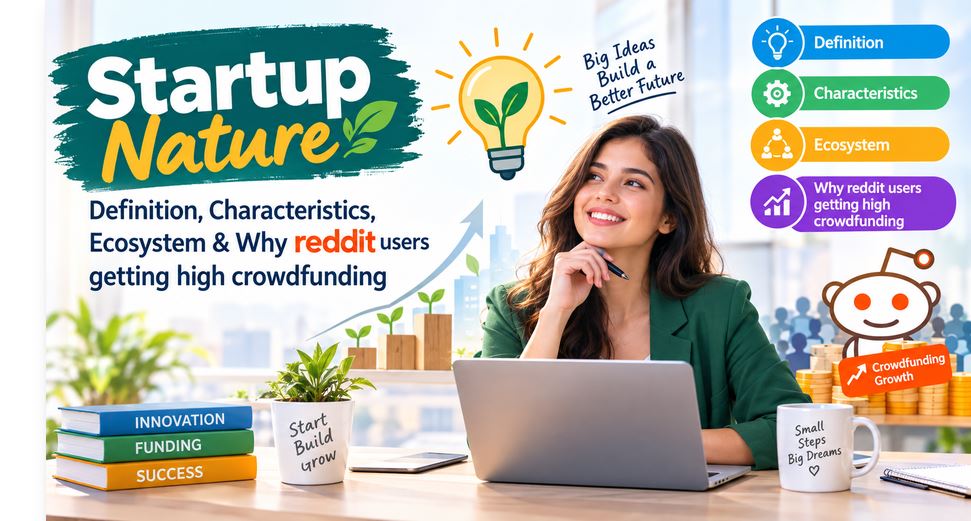
A Startup Nature is more than just a young company with a clever idea and always trying to get more crowd fundings with their research and innovative efforts. It’s a dynamic venture built on innovation, risk-taking, and rapid growth potential. Understanding the nature of startups is essential for aspiring entrepreneurs, investors, and business professionals who want to navigate the startup ecosystem effectively.
The modern business landscape has transformed dramatically in the last decade. Startups have become the driving force behind technological jobs and innovation, economic disruption, and job creation globally. From Silicon Valley to emerging markets like India, startups are reshaping industries and challenging established business models.
This Quick white box walkthrough explores what defines a startup, its core characteristics, business models, and the ecosystem that supports startup growth. Whether you’re considering launching your own venture or looking to invest in one, understanding the fundamental nature of startups is your first step toward success.
Key Takeaways
- Startups are newly founded ventures focused on rapid growth and scalability, distinct from traditional small businesses.
- The nature of startups centers on innovation, risk-taking, and disruptive business models that challenge existing markets.
- Successful startups require adequate funding, talented teams, clear value propositions, and market validation to survive and scale.
- The startup ecosystem includes investors, accelerators, incubators, mentors, and support networks that facilitate growth and success.
- Understanding startup characteristics helps entrepreneurs build sustainable businesses and investors identify high-potential opportunities.
Quick Answer
A startup is a young, rapidly growing company founded to develop or bring an innovative product, service, or business model to market. The nature of startups is characterized by high growth potential, uncertainty, limited resources, and a focus on scalability. Unlike traditional businesses, startups prioritize rapid expansion and market disruption over immediate profitability. They operate in dynamic environments, adapt quickly to market feedback, and aim to achieve significant returns on investment within 5-10 years.
What Defines a Startup?
The nature of startups revolves around creating something new and scaling it rapidly. A startup isn’t simply a business that opened last year—it’s a venture structured to grow quickly, solve specific problems, and potentially achieve exponential returns.
The definition of a startup varies depending on the context. In venture capital circles, a startup is typically a company seeking to scale through significant investment and market expansion. From a tax perspective, governments define startups based on age, revenue, and employee count. The most common understanding combines several elements.
A startup is fundamentally a company founded to develop an innovative product or service and bring it to a scalable market. This definition emphasizes three critical aspects: innovation, scalability, and rapid growth. These elements distinguish startups from traditional businesses that focus on steady, linear growth.
The nature of startups also includes their approach to uncertainty. Startups operate in unknown markets, test unproven business models, and navigate significant risks. This inherent uncertainty requires flexibility, experimentation, and data-driven decision-making. Founders must be comfortable with failure as part of the learning process.
Core Characteristics of Startups
Understanding the nature of startups requires examining their defining characteristics. These traits shape how startups operate, grow, and eventually succeed or fail in competitive markets.
Innovation and Disruption
At the heart of startup nature is innovation. Startups typically introduce new technologies, services, or business models that disrupt existing markets. They challenge the status quo and force established companies to adapt or risk obsolescence. This innovation isn’t always about inventing something entirely new—it’s often about solving existing problems in better, cheaper, or more convenient ways.
Scalability
Scalability separates startups from traditional small businesses. A startup’s business model is designed to grow exponentially without proportionally increasing costs. This might involve cloud-based software, network effects, or leveraging technology to serve more customers with the same resources. Sustainable scalability is what attracts venture capital investment.
Limited Resources
Early-stage startups typically operate with limited financial resources, small teams, and minimal infrastructure. This constraint forces creativity and efficiency. Founders wear multiple hats, and every decision must maximize impact per dollar spent. This lean approach often becomes a competitive advantage as it encourages rapid iteration and resource optimization.
High Risk and Uncertainty
The nature of startups inherently involves high risk. Statistically, most startups fail within the first five years. This uncertainty stems from unproven markets, execution challenges, competition, and external factors. Successful founders acknowledge these risks while maintaining optimism and resilience.
Rapid Iteration and Pivoting
Startups embrace the “fail fast” mentality. They launch minimum viable products (MVPs), gather customer feedback, and iterate quickly. This approach differs significantly from traditional businesses that spend months or years perfecting products before launch. The startup nature values speed and learning over perfection.
Growth-Focused Culture
Startup culture emphasizes rapid growth, innovation, and impact. Teams are typically young, motivated, and willing to work long hours for equity upside. There’s a sense of mission and urgency that permeates the organization. Performance metrics and metrics-driven decision-making are crucial.
Lean Operations
Startups operate lean, avoiding unnecessary overhead. This includes outsourcing non-core functions, using SaaS tools instead of building software, and maintaining small teams. This operational efficiency allows startups to achieve more with less and extend runway despite limited capital.
Types of Startups
The startup ecosystem encompasses diverse venture types, each with unique characteristics and growth trajectories.
Technology Startups
Tech startups develop software, applications, or digital platforms. Examples include SaaS companies, mobile apps, AI-powered tools, and web platforms. These startups typically have high scalability potential and attract significant venture capital investment.
Biotech and Healthtech Startups
These ventures develop pharmaceutical innovations, medical devices, or healthcare solutions. They require substantial capital investment, lengthy regulatory processes, and extensive research before commercialization.
Fintech Startups
Financial technology startups disrupt banking, payments, lending, and investment sectors. They’ve revolutionized how people access financial services and manage money.
E-commerce Startups
These businesses build online retail platforms or marketplaces. Their success depends on customer acquisition, logistics efficiency, and competitive pricing.
B2B Startups
Business-to-business startups provide software, services, or tools to other businesses. They often have longer sales cycles but higher customer lifetime value.
Consumer-Focused Startups
These ventures target end consumers through direct-to-consumer (D2C) models. They include fashion brands, food services, and lifestyle products.
Deep Tech Startups
These startups develop fundamental scientific or engineering innovations. They typically require significant capital, long development timelines, and specialized expertise.
Startup Business Models
The nature of startups is closely tied to their business models. Different startups adopt varying revenue generation strategies based on their products and target markets.
Software-as-a-Service (SaaS)
SaaS startups offer cloud-based software subscriptions. This model provides recurring revenue, scalability, and predictable cash flow. Examples include Slack, Zoom, and Salesforce.
Marketplace Model
Marketplace startups connect buyers and sellers, taking a commission on transactions. Uber, Airbnb, and Amazon originated as marketplace startups.
Subscription Model
Startups charge recurring fees for access to products or services. This model includes streaming services, membership platforms, and premium content subscriptions.
Freemium Model
These startups offer free basic services with paid premium tiers. This model maximizes user acquisition while monetizing power users.
Advertising-Supported
Platforms like Facebook and YouTube built their business around advertising revenue, offering free services to users.
Licensing Model
Some startups develop technology or intellectual property and license it to larger companies for implementation.
Hybrid Models
Many modern startups combine multiple revenue streams. For instance, a marketplace might charge both commissions and subscription fees.
The Startup Ecosystem
The nature of startups cannot be understood in isolation. They exist within a complex ecosystem of stakeholders, institutions, and resources that collectively support startup creation and growth.
Venture Capital Investors
VCs provide funding in exchange for equity. They offer not just capital but also mentorship, networks, and strategic guidance. Venture capital has become essential for scaling startups rapidly.
Accelerators and Incubators
These programs provide early-stage startups with funding, mentorship, office space, and access to investor networks. Y Combinator, Techstars, and regional accelerators have launched thousands of successful ventures.
Angel Investors
High-net-worth individuals who invest in early-stage startups often bring valuable experience and networks beyond capital.
Corporate Innovation Programs
Established companies increasingly partner with startups through corporate venture arms, innovation labs, and acquisition pipelines.
Educational Institutions
Universities and business schools support entrepreneurship through courses, funding competitions, and resources.
Startup Communities and Networks
Local startup communities, coworking spaces, and industry associations foster collaboration and knowledge sharing.
Government Support
Many governments provide grants, tax incentives, and regulatory support to encourage startup growth.
Funding Stages in Startups
Understanding startup funding stages is crucial to understanding how startups grow and sustain themselves.
Pre-Seed Stage
Before formal funding, founders bootstrap using personal savings or friends and family money. They focus on validating the idea and building an MVP.
Seed Stage
Seed funding (typically $500K-$2M) helps startups develop their product, build an initial team, and launch to market. Seed investors include angel investors and early-stage VCs.
Series A
Series A funding ($2M-$15M) scales the product and expands go-to-market efforts. Companies typically have proven product-market fit before raising Series A.
Series B and Beyond
Later-stage funding (Series B, C, D) supports aggressive market expansion, geographic scaling, and potential acquisition or IPO preparation.
IPO and Exit
Successful startups either go public through an Initial Public Offering (IPO) or get acquired by larger companies. This is the exit event investors anticipate.
Challenges Startups Face
The nature of startup challenges is multifaceted. Understanding these obstacles helps founders prepare and develop resilience.
Market Risk
Building a product nobody wants is a primary failure reason. Market validation and customer discovery are essential but often overlooked.
Competition
Startups face competition from established players with greater resources and from other startups pursuing similar ideas.
Talent Acquisition
Attracting and retaining skilled talent is difficult for startups with limited capital and brand recognition. Equity compensation helps but isn’t always sufficient.
Cash Flow Management
Many startups burn through capital faster than anticipated. Maintaining adequate runway and managing burn rate is critical.
Scaling Challenges
As startups grow, operations become complex. Systems, processes, and organizational structures must evolve to support scaling.
Regulatory Hurdles
Depending on the industry, startups may face regulatory challenges, compliance costs, and approval processes that slow growth.
Founder Burnout
The intense pressure and long hours of startup building lead to burnout. Mental health and work-life balance are significant challenges.
How Startups Differ from Small Businesses
Understanding the nature of startups requires distinguishing them from traditional small businesses. While these terms are sometimes used interchangeably, they represent fundamentally different ventures.
| Aspect | Startups | Small Businesses |
|---|---|---|
| Primary Goal | Rapid growth and scalability | Steady, sustainable profitability |
| Growth Rate | Exponential (100%+ annually) | Linear (10-20% annually) |
| Funding Source | Venture capital, angel investors | Owner savings, bank loans |
| Team Size | Small, equity-focused | Larger, salary-focused |
| Risk Tolerance | High risk accepted | Conservative approach |
| Market Focus | New markets or disruption | Established, local markets |
| Timeline | 5-10 year exit goal | Long-term indefinite operation |
| Scalability | High scalability prioritized | Scalability secondary |
| Innovation | Constant innovation required | Incremental improvements |
| Pivot Capability | Frequent pivots expected | Rare business model changes |
Keys to Startup Success
Building on understanding the nature of startups, several critical success factors emerge from analyzing successful founders and ventures.
Clear Problem-Solution Fit
The most successful startups identify a real, painful problem and develop a solution customers desperately need. This clarity of purpose guides all decisions.
Strong Founding Team
The founding team’s skills, experience, and chemistry significantly impact startup success. Diverse skills and complementary expertise create stronger teams.
Product-Market Fit
Achieving product-market fit—where the market demands your product—is essential before scaling. This requires customer validation and iterative development.
Adequate Capitalization
While bootstrapping is possible, adequate funding allows startups to scale faster and survive longer. Strategic capital raises are crucial.
Customer-Centric Approach
Successful startups obsess over customer needs, gather feedback constantly, and prioritize customer satisfaction over vanity metrics.
Adaptability
The nature of startups demands flexibility. Founders must adapt strategies, pivot business models, and respond to market changes quickly.
Execution Excellence
Great ideas fail without excellent execution. Building processes, assembling talented teams, and maintaining discipline separate successful startups from failures.
Persistence and Resilience
Startup journeys involve rejection, failure, and setbacks. Founders who persist through challenges ultimately succeed more often than those who give up.
Expert Tips for Aspiring Entrepreneurs
Drawing from successful startup founders and experienced investors, several practical recommendations emerge for anyone considering startup creation.
Validate Before Building
Don’t spend months building a product nobody wants. Talk to potential customers first, understand their pain points, and validate demand before heavy development investment.
Start with a Narrow Focus
Broad markets are harder to penetrate. Start by dominating a niche market, then expand. This focused approach allows better resource allocation and faster market penetration.
Build an Advisory Board
Surround yourself with experienced mentors and advisors. Their guidance, networks, and feedback accelerate learning and growth.
Focus on Unit Economics
Understand the financial model deeply. Know your customer acquisition cost (CAC), lifetime value (LTV), and gross margins. Unit economics determine long-term viability.
Maintain a Founder’s Discipline
Don’t optimize prematurely. Focus ruthlessly on core metrics that indicate progress toward product-market fit. Ignore distracting metrics.
Hire for Culture and Mission Alignment
Early hires disproportionately shape company culture. Hire people who share your mission and values, even if they’re not perfect on every skill dimension.
Raise Capital Strategically
Don’t raise more money than necessary. Larger funding rounds create pressure to grow aggressively and often lead to wrong strategic decisions. Raise enough to achieve your next major milestone.
Document and Communicate
As you grow, document processes and communicate clearly. This reduces confusion, speeds onboarding, and creates accountability.
Common Mistakes in Startups
Learning from common startup mistakes helps founders avoid repeating them.
Building Without Validation
Spending months developing a product based on founder assumptions rather than customer validation leads to failure. Talk to customers before building.
Ignoring Customer Feedback
Some founders become attached to their original vision and ignore market feedback. Successful startups listen to customers and iterate accordingly.
Overcomplicating Early Products
First versions should be simple, focused, and quickly launched. Perfectionism delays market entry and feedback gathering.
Hiring Too Quickly
Growing the team before establishing product-market fit is wasteful. Spend time perfecting the product with a lean team first.
Chasing Vanity Metrics
Focusing on user counts or downloads rather than engagement, retention, and revenue misleads founders about actual progress.
Neglecting Cash Flow
Many startups fail despite strong revenue growth due to cash flow mismanagement. Profitability and cash reserves matter more than top-line metrics.
Abandoning Too Early
Some founders quit when facing early setbacks. Most successful startups faced significant challenges; persistence matters.
Ignoring Compliance and Legal Issues
Skipping proper incorporation, contracts, and compliance creates legal risk. Professional guidance is worth the investment.
Benefits of the Startup Approach
Understanding the advantages of startup structures helps explain their prevalence and impact.
Speed to Market
The lean startup approach enables rapid iteration and market entry. Startups move faster than traditional companies burdened by bureaucracy.
Innovation and Disruption
Startups’ focus on innovation leads to breakthrough products and services that transform industries.
Efficiency
Resource constraints force startups to operate efficiently, eliminating wasteful practices common in larger organizations.
Employee Engagement
The startup mission, equity participation, and flat hierarchies create highly engaged, motivated employees.
Adaptability
Startups’ lack of legacy systems and rigid processes allows quick adaptation to market changes.
Return on Investment
Successful startups generate exceptional returns for early investors and founders.
Economic Impact
Startups create jobs, drive innovation, and contribute significantly to economic growth and technological progress.
FAQs
What is the exact definition of a startup?
A startup is a young company founded to develop an innovative product or service and scale it rapidly to serve a large market. Unlike traditional small businesses, startups prioritize exponential growth over immediate profitability and operate under significant uncertainty. Startups typically seek venture capital funding and aim for a successful exit through acquisition or IPO within 5-10 years.
What is the average lifespan of a startup?
Most startups operate for 5-10 years before achieving an exit event or closure. According to various studies, approximately 90% of startups fail within the first five years. Successful startups that achieve product-market fit and secure adequate funding often grow into established companies or get acquired by larger corporations within this timeframe.
How much money does a typical startup need?
Startup funding requirements vary dramatically based on industry, business model, and growth ambitions. Pre-seed startups might require $50K-$250K bootstrapped or from friends and family. Seed-stage startups typically raise $500K-$2M. Series A funding ranges from $2M-$15M for companies with proven product-market fit. Tech startups generally require less capital than biotech or hardware startups.
What percentage of startups succeed?
Success rates depend on how “success” is defined. If success means achieving profitability and avoiding failure, approximately 50% of startups survive beyond five years. If success means achieving venture-scale returns (100x+ returns for investors), the rate is approximately 1-2%. However, many founders consider learning and personal growth as success even if the specific venture fails.
What’s the difference between a startup and an entrepreneur?
An entrepreneur is a person who creates and operates a business venture, while a startup is the business itself. All startups are created by entrepreneurs, but not all entrepreneurs create startups. Some entrepreneurs build traditional small businesses, nonprofit organizations, or independent freelance ventures. The key difference is that startup entrepreneurs specifically focus on scalable, high-growth ventures.
Conclusion
The nature of startups fundamentally shapes modern business and innovation. Startups are more than just young companies—they’re ventures built on innovation, rapid growth, and transformative potential. They operate differently from traditional businesses, accepting uncertainty and risk in pursuit of exponential returns.
Understanding the characteristics, ecosystem, and challenges of startups is essential for anyone involved in business today. Whether you’re considering launching your own startup or investing in emerging ventures, comprehending the nature of startups guides better decisions and increases success probability.
The startup landscape continues evolving with technological advancement, changing investment patterns, and global expansion. Emerging technologies like artificial intelligence, blockchain, and biotech are creating new startup categories. Meanwhile, remote work and global markets make it easier than ever to start and scale businesses.
6 thoughts on “Startup Nature, Definition, Characteristics, Ecosystem & Why reddit users talking about high crowd funding”
Comments are closed.